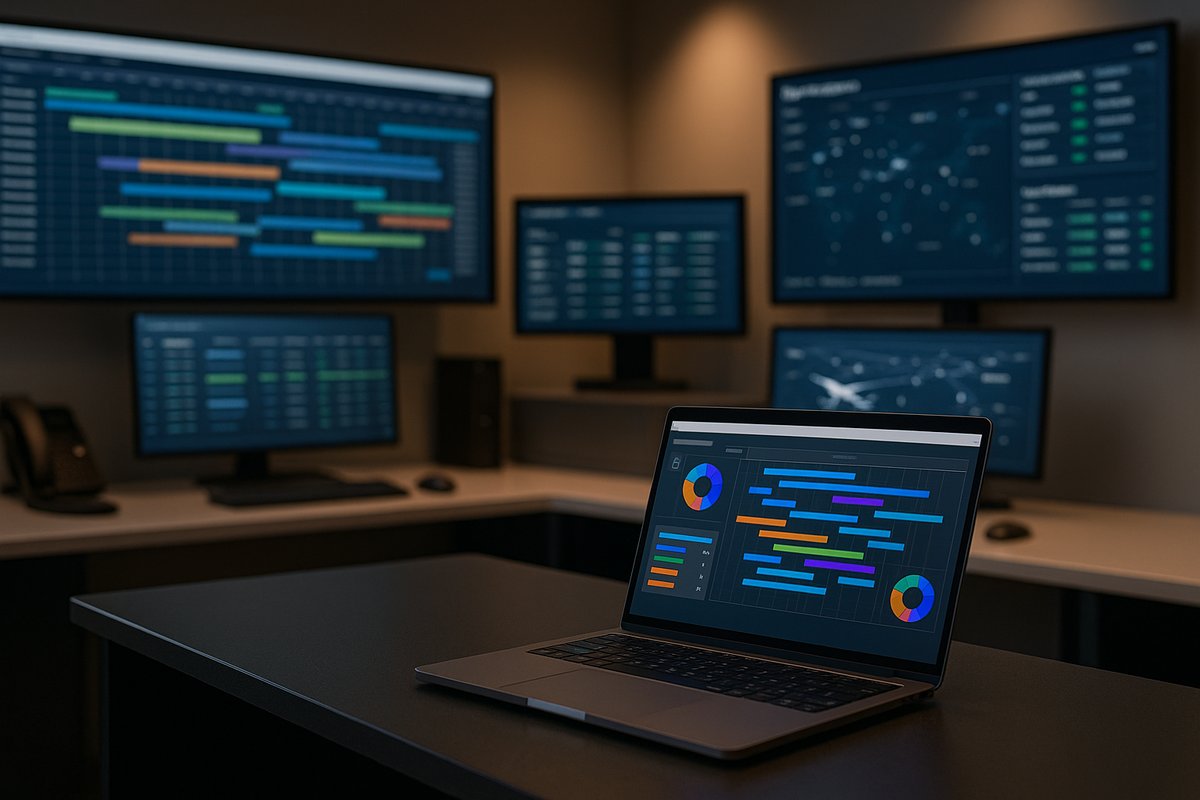
AI in Airline Crew Scheduling: Navigating IROPS with MARK
The Unexpected Turn: Weather-Induced IROPS
On a seemingly routine day in Indian aviation, an unexpected turn of events unfolded, challenging the resilience of airline operations control and crew scheduling teams. As a robust thunderstorm swept across the subcontinent, flights were forced to divert away from their intended destinations to ensure passenger safety. This sudden weather-induced IROPS (Irregular Operations) set off a chain reaction, disrupting carefully laid plans and thrusting the airline's operations into a state of high alert.
The heart of the storm's impact lay in its timing, placing flights perilously close to crew duty-time limits, as delineated by the DGCA's Flight Duty Time Limitations (FDTL) rules. The potential for crew duty-time breach loomed large, threatening to extend delays and complicate passenger itineraries further. In such high-stakes scenarios, the ability to swiftly adapt and reconfigure is critical.
This is where MARK, the airline's AI-powered crew scheduling tool, demonstrated its prowess. MARK seamlessly integrated with existing systems, recalibrating crew rosters in mere minutes. By meticulously considering DGCA FDTL regulations, MARK ensured compliance while minimizing operational disruptions. This rapid response not only safeguarded against regulatory breaches but also maintained the airline's commitment to passenger satisfaction.
Incorporating AI in handling such IROPS events showcases the transformative impact of technology in modern aviation. With solutions like MARK, airlines are better equipped to navigate the complexities of unforeseen challenges, ensuring a balance between operational efficiency and regulatory compliance. As the skies cleared over India, the event served as a testament to the power of AI in revolutionizing airline operations.
For more insights into how AI is reshaping airline operations, explore our solutions.
Navigating Complexity: Crew Duty-Time Breach
Imagine the bustling confines of an airline operations control center in India, where every second counts, and decisions can sway the tide of an entire day's schedule. A sudden bout of inclement weather has forced an unexpected diversion of a flight that was en route to its destination. As the aircraft touches down at an alternate airport, the crew's duty time clocks perilously close to breaching the DGCA's Flight Duty Time Limitations (FDTL). This is a classic IROPS (Irregular Operations) event, and the pressure mounts on the crew schedulers to realign the roster without compromising regulatory compliance.
In the midst of this operational chaos, traditional scheduling systems might falter, but technology steps in as a savior. Enter MARK, an advanced AI-driven tool designed specifically to tackle such challenges with precision and speed. MARK rapidly recalculates the duty roster, ensuring that all alterations respect the stringent DGCA FDTL rules. This tool’s ability to instantly process complex data and propose optimal scheduling solutions makes it indispensable, especially when decisions need to be made in minutes.
For crew schedulers, navigating the complexities of IROPS events involves more than just numbers and regulations. It's about ensuring the well-being of the crew, maintaining operational efficiency, and minimizing disruptions to passengers. With MARK's support, the airline can swiftly adapt to the dynamic nature of weather-related diversions, allowing operations to continue with minimal hiccups.
In a region where aviation is both a lifeline and a rapidly growing sector, tools like MARK are revolutionizing how airlines respond to unexpected events. By leveraging AI, Indian airlines are not only improving their resilience in the face of IROPS events but also setting a benchmark in operational excellence. Discover more about how AI is reshaping airline operations by visiting AIMATRIC.
AI to the Rescue: Meet MARK
In the bustling world of airline operations, disruptions are inevitable, often triggered by unpredictable weather patterns. Such was the case when a fierce monsoon storm forced a major Indian airline to divert its flight. The sudden weather diversion not only left passengers stranded but also pushed the crew dangerously close to breaching their duty-time limits as per DGCA's FDTL rules. Enter MARK, the AI-driven solution designed to handle these exact scenarios with precision and speed.
MARK's real-time decision-making capabilities came into play almost instantly. As the airline's ops control team grappled with the unfolding IROPS event, MARK swiftly began analyzing the situation. Within minutes, it assessed the crew's remaining duty hours, the available standby crew, and the logistical constraints, all while adhering strictly to the DGCA's stringent regulations.
MARK's sophisticated algorithms allowed it to rebuild the crew roster with remarkable efficiency, ensuring that compliance with duty-time limitations was maintained without compromising operational integrity. The AI solution seamlessly integrated with existing airline systems, pulling in data from various sources to ensure that every decision was informed and precise. This not only minimized delays but also optimized crew utilization, showcasing MARK's ability to turn potential chaos into a streamlined operation.
This incident highlighted how AI solutions like MARK are revolutionizing the aviation industry, particularly in the context of Indian aviation. By reducing the manual workload on crew schedulers and enhancing decision-making processes, MARK allows airlines to navigate disruptions with confidence and efficiency. Such innovations are crucial in maintaining the delicate balance between operational demands and regulatory compliance, illustrating the future of airline crew scheduling in India.
Rebuilding the Roster: A Narrative of Precision
In the bustling control room of an Indian airline's operations center, the tension was palpable. A sudden weather diversion had thrown the entire schedule into disarray, and the clock was ticking. The crew's duty times were dangerously close to breaching the DGCA's Flight Duty Time Limitations (FDTL) regulations, threatening delays and cancellations. Amidst the chaos, MARK, the airline's AI-driven crew scheduling tool, took center stage.
As the news of the diversion trickled in, the ops control team sprang into action. The existing roster was no longer viable, and there was no time to manually shuffle crew assignments without risking regulatory non-compliance. This is where MARK shone. With its advanced algorithms and real-time data processing capabilities, MARK swiftly analyzed the situation, considering factors such as crew availability, rest requirements, and the intricate web of DGCA FDTL rules.
Within minutes, MARK had recalibrated the entire schedule. The tool not only ensured that all flights had qualified crew members ready to take off but also respected the mandatory rest periods crucial for maintaining safety standards. By rebuilding the roster with precision, MARK prevented potential cascading delays across the airline's network, maintaining operational efficiency even under pressure.
For the airline ops control and crew scheduling teams, MARK has become an invaluable asset. Its ability to swiftly respond to disruptions like weather diversions enables airlines to maintain reliability in the face of unexpected challenges. MARK's integration into the airline's operations exemplifies how AI can transform crisis management, making it a vital component in modern aviation operations.
To learn more about how AI technologies like MARK are revolutionizing airline operations, visit here. Discover the full range of solutions that help streamline scheduling and enhance operational outcomes.
Lessons Learned: The Future of AI in IROPS Management
In the dynamic world of airline operations, managing Irregular Operations (IROPS) can often resemble walking a tightrope, particularly when unexpected weather diversions lead to crew duty-time breaches. A recent incident underscored the transformative potential of AI in navigating these challenges. As heavy monsoon rains swept across the Indian subcontinent, an aircraft was diverted, pushing the crew's duty time perilously close to the limits set by the DGCA FDTL regulations. Enter MARK, the AI-powered scheduling tool, which swiftly recalibrated the crew roster in mere minutes, ensuring compliance and operational continuity.
This ability to rapidly adapt is at the heart of AI's promise in IROPS management. Traditional methods often involve labor-intensive manual adjustments, which can lead to significant delays and increased operational costs. By contrast, AI systems like MARK leverage real-time data and sophisticated algorithms to optimize crew schedules, minimizing disruptions while adhering to regulatory requirements. This not only enhances operational efficiency but also bolsters the reliability and safety of airline services.
Looking to the future, the integration of AI in airline operations within the Indian context is poised to deepen. As AI technologies advance, we can expect even more nuanced capabilities, such as predictive analytics that foresee potential IROPS events and preemptively adjust schedules. Furthermore, AI-driven tools can enhance communication and decision-making across departments, creating a more cohesive response to disruptions.
For airline operations control and crew scheduling teams, embracing these technologies offers a path to not only better manage IROPS but also to redefine the standards of efficiency and resilience in aviation. As the skies become busier and the climate more unpredictable, the role of AI will be crucial in ensuring that airlines remain agile and responsive. Discover more about AI's impact on airline operations at MARK and how it is reshaping the future of crew scheduling.