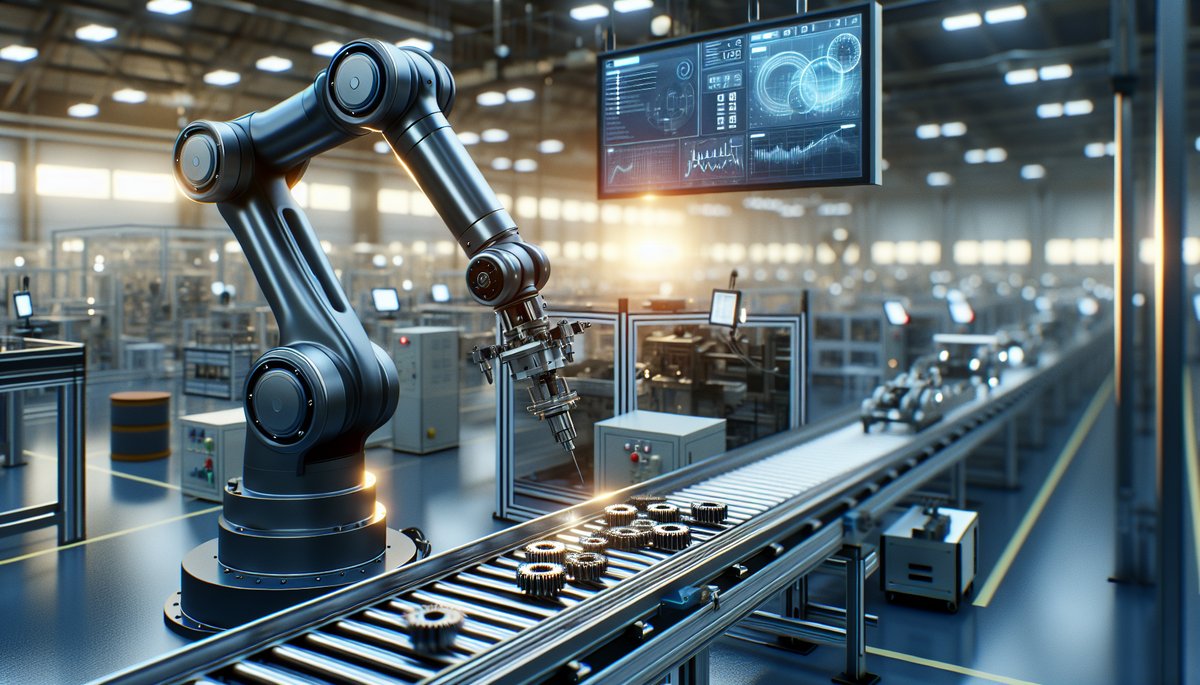
Introduction to AI Agents in Manufacturing
In the ever-evolving landscape of manufacturing, AI agents are increasingly becoming pivotal in enhancing quality inspection and defect tracking. These advanced systems utilize sophisticated algorithms and multi-sensor data fusion to monitor production lines meticulously. AI agents like MARK, VALI, SU, and REKON are transforming traditional quality control processes into automated, precision-focused endeavors. By integrating data from cameras, thermal sensors, and vibration monitors, they detect anomalies that human inspectors might overlook, ensuring higher accuracy and efficiency.
These AI agents not only automate defect detection but also provide predictive defect forecasting by analyzing production data and testing reports to spot patterns and predict potential quality issues. This allows manufacturers to address defects proactively, reducing waste and operational costs. Moreover, agents such as these can seamlessly integrate with existing Enterprise Resource Planning (ERP) and Manufacturing Execution Systems (MES), enabling real-time decision-making and corrective actions.
For manufacturing companies looking to enhance their operations, deploying AI agents offers significant benefits. They reduce the need for manual inspections, ensure consistent product quality, and facilitate compliance with industry regulations by automating documentation and compliance checks. As the manufacturing sector continues to embrace AI-driven solutions, the efficiency and reliability of production processes are set to improve markedly.
To learn more about how AI is transforming manufacturing processes, explore our insights on AI in inventory dispatch and enterprise transformation.
Understanding Aimatric's AI Agents: MARK, VALI, SU, and REKON
In the complex landscape of manufacturing, quality inspection and defect tracking are paramount. Aimatric's suite of AI agents—MARK, VALI, SU, and REKON—offer a transformative approach to these challenges, enhancing precision and efficiency through automation. Each agent contributes uniquely to the process, working harmoniously to monitor, analyze, and optimize production lines.
MARK specializes in real-time monitoring of production environments. By leveraging advanced sensor data and machine vision, MARK identifies discrepancies such as surface defects or dimensional inaccuracies. This ensures that production quality remains consistently high, minimizing defects and rework.
VALI takes charge in validating and executing corrective actions. When MARK identifies an anomaly, VALI evaluates potential solutions and implements necessary adjustments, such as modifying a machine’s operational parameters. This proactive approach not only corrects issues swiftly but also enhances the overall production workflow.
SU plays a critical role in orchestrating workflow processes. By integrating with existing QMS platforms, SU enables seamless communication and coordination between different production stages. This ensures that any identified defects are addressed promptly, reducing the time from detection to resolution.
REKON focuses on predictive maintenance and continuous improvement. By analyzing historical data and current production metrics, REKON predicts potential failures and recommends preventive measures, thereby extending equipment lifespan and reducing downtime.
The synergy between these agents exemplifies how AI can revolutionize manufacturing by ensuring quality control and optimizing efficiency. For a deeper dive into how AI agents are reshaping enterprises, explore our article on AI Autonomous Agents.
The Benefits of Automated Quality Inspection
In the rapidly evolving landscape of manufacturing, the integration of AI agents for automated quality inspection is proving to be a game-changer. By leveraging advanced technologies such as machine vision and predictive analytics, AI agents like MARK, VALI, SU, and REKON are transforming traditional quality control processes into efficient, accurate, and cost-effective solutions.
One of the primary benefits of using AI agents in quality inspection is the significant increase in efficiency. These intelligent systems can process and analyze vast amounts of data from sensors and cameras at a speed unmatched by human inspectors, allowing for real-time defect detection and correction. This not only accelerates production lines but also minimizes downtime, resulting in faster time-to-market for products.
Accuracy is another critical advantage. AI-powered inspection systems can identify even the most minute defects that might be overlooked by the human eye. By employing computer vision, these systems ensure that each product meets stringent quality standards, thereby reducing the incidence of defective items reaching customers. This precision in defect detection leads to a reduction in scrap and rework costs, which in turn enhances customer satisfaction and reduces warranty claims.
Moreover, the cost-effectiveness of AI agents is evident in their ability to lower labor expenses. By automating routine inspections, they free up skilled personnel to focus on higher-value tasks such as strategic quality initiatives and supplier management. This shift not only boosts labor productivity but also contributes to overall operational savings.
The adoption of AI agents in quality inspection also supports compliance and continuous improvement initiatives, as these systems automatically document quality data. This seamless integration of AI into manufacturing processes not only enhances operational efficiency but also fosters a culture of proactive quality management, as detailed in our discussion on AI transformations in manufacturing.
Real-Time Defect Tracking and Analysis
In the fast-paced world of manufacturing, ensuring product quality before products reach the market is crucial. AI agents like MARK and SU offer a transformative approach to real-time defect tracking and analysis. These agents integrate advanced data fusion and computer vision to enable precise quality control, reducing false rejects and enhancing operational efficiency.
By leveraging computer vision, these AI systems can identify even the smallest inconsistencies that might escape human detection. Unlike traditional methods that rely on sampling and delayed inspections, AI agents provide immediate feedback, ensuring defects are caught and addressed promptly. This proactive approach not only prevents defects from reaching the market but also optimizes manufacturing workflows by suggesting real-time adjustments.
The integration of AI agents into manufacturing processes involves seamless connectivity with camera systems, sensor networks, and enterprise software. This allows for real-time data processing, which is essential for immediate defect detection and analysis. For instance, AI systems have shown a 40% reduction in false rejects by improving detection precision, which directly translates to higher production output and reduced material costs.
Moreover, these AI systems continuously learn and adapt to new production variables and defect types, maintaining consistent performance even as product designs change. This dynamic capability ensures that manufacturers can maintain high-quality standards while reducing downtime and waste. By implementing AI-driven quality control solutions, enterprises can shift from reactive to predictive strategies, ensuring a robust approach to maintaining product quality.
For further insights into how AI agents are revolutionizing manufacturing processes, explore the transformative impact of AI on inventory dispatch and logistics.
Integration of AI Agents with Manufacturing Systems
Integrating AI agents with manufacturing systems revolutionizes how quality inspection and defect tracking are managed. Aimatric's AI agents, such as MARK, VALI, SU, and REKON, seamlessly integrate with existing technologies to enhance operational efficiency and productivity. These agents autonomously inspect production data, detecting defects and optimizing processes, which leads to significant reductions in defects and improved quality control.
Unlike traditional automation that relies on fixed rules, Aimatric's AI agents learn from data and adapt to real-time changes on the factory floor. This adaptability allows them to monitor equipment in real-time, comparing current performance against learned baselines. Upon detecting deviations, the agents calculate failure probabilities and recommend necessary actions.
These advanced agents go beyond simple pass/fail decisions. They classify defect types, track defect patterns across production runs, and correlate quality issues with specific machines or material batches. If an agent detects an increasing trend in defects, it can trigger process investigations before quality deteriorates, thus maintaining high standards of production quality. Manufacturers report substantial defect reductions and improved first-pass yield rates, underscoring the effectiveness of AI-powered quality control.
The integration of these AI agents also extends to supply chain optimization, where they monitor global logistics networks and track inventory in real-time. This capability allows for efficient demand forecasting and coordination with suppliers, effectively navigating complexities that would overwhelm manual processes. By leveraging the vast data generated in manufacturing environments, Aimatric's AI agents transform operations, ensuring seamless integration and continuous improvement.
For more insights into how AI is transforming manufacturing, you can explore articles on AI-powered demand forecasting and inventory dispatch in manufacturing.
Case Studies: Success Stories with Aimatric AI Agents
In the realm of manufacturing, Aimatric AI agents have become a cornerstone in revolutionizing quality inspection and defect tracking. These intelligent agents, such as MARK, VALI, SU, and REKON, have demonstrated significant success in enhancing manufacturing processes by providing real-time data analysis and predictive maintenance capabilities. This transformation is evident in several case studies across the industry.
For instance, in automotive manufacturing, the implementation of Agentic AI has addressed the challenges of delayed defect detection, which previously led to inefficiencies and missed optimization opportunities. By processing data from high-speed cameras and sensors, these AI agents detect dimensional inaccuracies, surface defects, and assembly errors in real time. Their ability to continuously learn from new data ensures ever-improving detection accuracy, thus reducing false positives and transforming quality assurance into a proactive system.
Furthermore, manufacturers deploying these AI agents have seen a significant reduction in scrap and defects, thanks to continuous quality monitoring. Real-time inspection and anomaly detection allow for automated corrections that keep production within acceptable limits. By integrating with existing Quality Management Systems (QMS), these agents ensure faster issue resolution and consistent production quality, ultimately leading to improved operational efficiency.
The success of these implementations is not just confined to defect reduction. Enhanced predictive maintenance capabilities mean that equipment failures are forecasted before they occur, reducing downtime and costs significantly. This proactive approach to maintenance schedules allows manufacturers to avoid unplanned stoppages, which can be financially devastating.
These advancements underscore how Aimatric's AI agents are revolutionizing the manufacturing landscape. They not only improve quality inspection processes but also contribute to a holistic improvement in supply chain performance through predictive coordination. Thus, manufacturers leveraging these AI solutions can expect a marked increase in productivity and a substantial reduction in costs.
Future Trends: The Evolution of AI in Quality Control
As the manufacturing industry continues to evolve, AI agents are at the forefront of transforming quality control processes. Aimatric's AI agents, including MARK, VALI, SU, and REKON, are pioneering innovations that enhance defect detection and enable autonomous repair, providing manufacturers with the tools needed to maintain high standards efficiently.
One of the most promising trends is the integration of multimodal reasoning and digital twins. These advanced systems combine various data types—visual, text, audio, and sensor data—to provide comprehensive analysis and insights. This fusion allows AI agents to perceive, plan, and execute tasks collaboratively with human teams, leading to significant operational improvements and cost savings by reducing scrap and enhancing productivity.
By 2030, it is anticipated that 60% of manufacturers will adopt AI for data management, significantly lowering quality-related costs. AI-driven systems are becoming essential for modern manufacturing, offering precision, adaptability, and reliability. The convergence of AI quality control with advanced robotics represents another transformative development. Systems are emerging that not only detect defects but implement robotic corrections autonomously—exemplified by the electronics assembly sector, where AI directs robotic repair stations with impressive effectiveness.
Looking ahead, AI-powered quality control will continue to redefine manufacturing landscapes. It addresses challenges such as high labor costs and inconsistent quality through data-driven optimization and end-to-end solutions. As manufacturers adopt these intelligent systems, they will benefit from improved efficiency, reduced costs, and elevated quality standards, ensuring competitiveness in the global market.
For more insights on how AI is transforming industries, explore our articles on AI-powered demand forecasting and inventory dispatch in manufacturing.