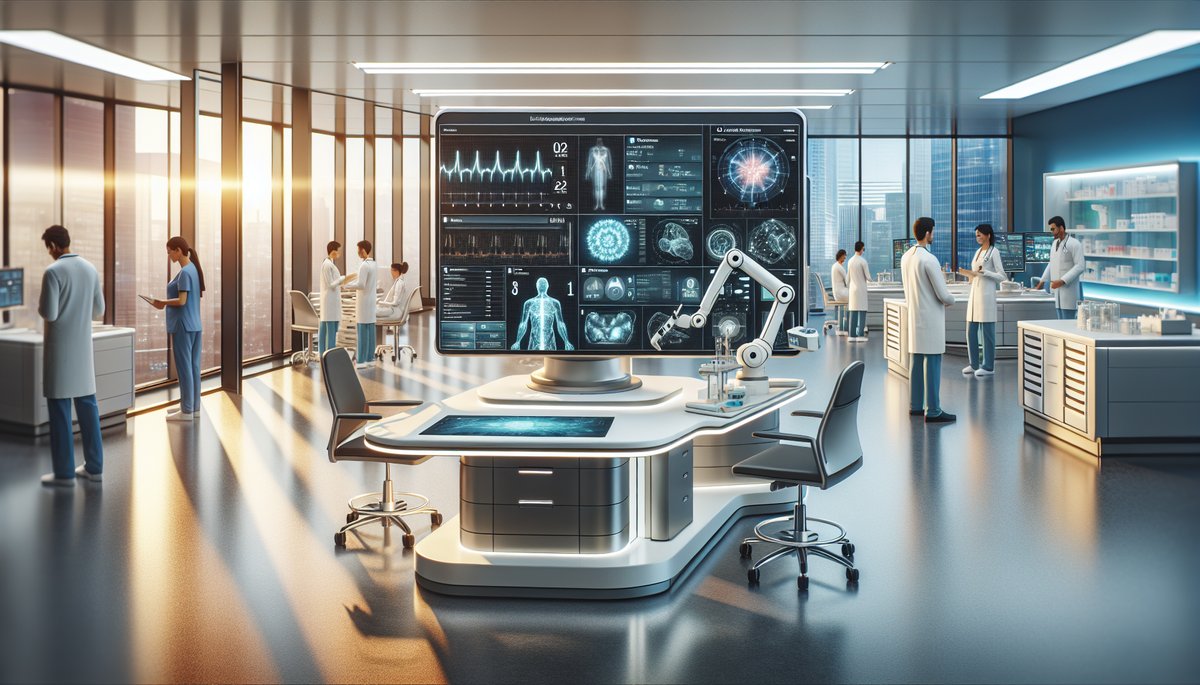
Introduction to AI in Healthcare
Artificial Intelligence (AI) is revolutionizing the healthcare industry by enhancing patient care and optimizing operational efficiency. For mid-large scale healthcare organizations, the integration of AI offers substantial returns on investment (ROI) through improved accuracy and streamlined processes. AI technologies are employed to enhance diagnostics, which leads to early detection of conditions such as cancer and heart disease, ultimately improving patient outcomes and reducing costs. By enabling predictive analytics, AI empowers healthcare providers to foresee potential health risks and intervene earlier, thereby minimizing expensive hospitalizations.
The healthcare AI market is projected to grow from $11 billion in 2021 to nearly $187 billion by 2030, underscoring the significant impact AI is expected to have on all aspects of healthcare delivery. This growth is driven by AI's ability to optimize clinical workflows, enhance drug development processes, and personalize patient care. AI systems are also pivotal in supporting healthcare professionals by providing intelligent decision support, which allows them to offer more effective care and to operate at the top of their professional capabilities.
Moreover, AI's role in healthcare extends to automating administrative tasks such as billing and scheduling, thereby reducing the operational burden on healthcare facilities. This automation not only enhances efficiency but also allows healthcare professionals to focus more on patient care rather than paperwork. As AI continues to be integrated into healthcare systems, its ability to deliver high-quality care while reducing operational costs becomes increasingly apparent, offering a compelling case for its adoption across the healthcare industry.
For more insights into how AI is transforming various industries, explore our detailed analysis on AI’s impact across sectors.
Maximizing ROI with AI Integration
In the rapidly evolving healthcare industry, integrating artificial intelligence (AI) presents a strategic opportunity to maximize return on investment (ROI) through enhanced accuracy, optimization, and cost reduction. AI technologies can revolutionize healthcare delivery in mid to large-scale settings by streamlining operations, improving patient outcomes, and boosting revenue streams.
One of the most effective strategies for maximizing ROI is prioritizing high-impact AI use cases that offer immediate value. For instance, revenue cycle optimization through AI can automate denial predictions, coding, and claims processing, reducing administrative costs and improving cash flow. Such automation not only saves time but also reduces errors that could lead to financial losses.
Another critical area is clinical workflow automation, where AI can accelerate processes such as triage, image analysis, and documentation. By integrating AI into these workflows, healthcare providers can enhance both the speed and accuracy of diagnoses, leading to better patient care and increased operational efficiency. Additionally, AI's role in boosting workforce productivity allows healthcare professionals to focus more on patient interaction and critical decision-making rather than routine tasks.
AI also plays a pivotal role in improving patient access and experience. Through predictive analytics, healthcare organizations can optimize resource allocation by predicting patient admissions and discharges, effectively managing bed availability, staffing, and equipment. This optimization translates into significant cost savings, thereby enhancing the overall ROI of AI investments. Furthermore, AI-powered tools like 24/7 chatbots can improve patient engagement and satisfaction by providing timely information and support.
The key to unlocking the full potential of AI in healthcare lies in a well-aligned implementation strategy. By aligning AI initiatives with organizational goals and continuously monitoring performance, healthcare organizations can ensure that their AI investments deliver substantial operational and financial value. Emphasizing stakeholder engagement and focusing on measurable outcomes are essential steps in this process.
In conclusion, AI integration in healthcare is not just a technological advancement but a fundamental shift towards more efficient, accurate, and patient-centered care. By strategically implementing AI technologies, healthcare providers can achieve significant ROI, ensuring sustainable growth and enhanced patient outcomes in the long term.
Optimizing Healthcare Operations through AI
The integration of artificial intelligence in the healthcare sector is rapidly transforming operations from the ground up, particularly for mid-large scale healthcare organizations. AI's ability to streamline operations through optimized resource allocation, automated administrative tasks, and enhanced patient flow management is paving the way for significant improvements in return on investment (ROI), operational efficiency, and accuracy.
One of the standout benefits of AI in healthcare is its capability to optimize resource allocation. AI algorithms can deftly analyze complex datasets, such as patient admissions, staff availability, and operational capacities, to ensure optimal use of human and material resources. This is particularly beneficial in scheduling surgeries and medical procedures to maximize the utilization of operating rooms and medical staff, thereby minimizing patient wait times. The result is a more efficient workflow that not only enhances patient satisfaction but also increases the ROI by reducing idle time and resource wastage.
Moreover, AI is revolutionizing administrative processes by automating routine tasks. This shift allows healthcare professionals to focus more on patient care rather than administrative duties, ultimately leading to better patient outcomes. For example, AI-driven tools are employed to extract and analyze data from electronic health records (EHRs) with high accuracy, thereby reducing the time spent on manual data entry and increasing operational efficiency. This not only improves accuracy but also accelerates decision-making processes, contributing to a more effective healthcare delivery system.
Patient flow management is another area where AI is making a significant impact. By using AI to predict patient inflows and optimize scheduling, hospitals can manage bed occupancy rates and reduce bottlenecks in patient care pathways. This ensures that patients receive timely care, which enhances their overall experience and satisfaction. As AI technology continues to evolve, its potential to provide real-time insights and predictive analytics can further enhance operational efficiencies.
Overall, the implementation of AI in healthcare operations offers a promising avenue for improving accuracy, optimizing resource use, and ultimately boosting ROI. As the healthcare industry continues to embrace AI, organizations can expect not only operational improvements but also a transformation in how care is delivered, making it more patient-focused and efficient.
Enhancing Accuracy in Diagnostics and Treatment
Artificial Intelligence (AI) is revolutionizing the healthcare industry, particularly in enhancing diagnostic accuracy and optimizing treatment outcomes. By leveraging AI's capabilities, healthcare providers can achieve remarkable improvements in patient care, ultimately leading to better experiences and reduced error rates.
AI's contribution to diagnostic accuracy is profound. By analyzing complex medical data, AI systems can identify diseases and abnormalities with precision that often surpasses human expertise. This capability is particularly evident in medical imaging, where AI algorithms excel at evaluating X-rays, CT scans, and MRIs to detect conditions such as tumors and fractures. Such advancements facilitate early disease detection, significantly improving patient outcomes and survival rates.
Moreover, AI is instrumental in personalizing treatment plans. By analyzing patient-specific data, AI helps healthcare providers develop tailored interventions that move away from the traditional "one-size-fits-all" approach. This personalized treatment strategy enhances the effectiveness and accuracy of medical interventions, ensuring that patients receive the most appropriate care for their unique health needs.
In addition to these benefits, AI-driven tools enhance the precision of medical imaging analysis. AI's ability to process vast amounts of data quickly and accurately means that healthcare professionals can make faster, more reliable diagnoses. This efficiency not only optimizes the diagnostic process but also supports clinicians in making informed treatment decisions, leading to a reduction in medical errors and improved healthcare outcomes.
The integration of AI in diagnostics and treatment planning represents a significant return on investment (ROI) for healthcare institutions. By optimizing processes and improving diagnostic accuracy, healthcare providers can enhance operational efficiency, reduce costs, and ultimately deliver higher quality care. As AI technology continues to evolve, its role in transforming healthcare is set to expand, promising even greater advancements in patient care and treatment precision.
Future Prospects: AI Advancements in Healthcare
The future of artificial intelligence (AI) in the healthcare sector is set to revolutionize how care is delivered, optimizing operations, enhancing accuracy, and maximizing return on investment (ROI) for large-scale healthcare institutions. As we look towards 2026 and beyond, AI technologies promise to drive significant advancements in precision medicine, diagnostics, and patient care. These innovations are poised to transform healthcare from a reactive to a proactive model, focusing on personalized, data-driven disease management.
One of the most promising aspects of AI is its ability to enhance precision medicine. By leveraging vast amounts of data, AI can tailor treatment plans to individual patient profiles, thereby improving outcomes and reducing unnecessary interventions. This personalized approach not only elevates the quality of care but also optimizes resource allocation, ultimately leading to increased ROI for healthcare providers.
AI's role in improving diagnostic accuracy is another critical area that holds immense potential. Advanced algorithms can analyze complex medical data, such as imaging scans, more accurately and efficiently than human capabilities alone. For instance, AI has been shown to be "twice as accurate" in interpreting brain scans for stroke patients, a testament to its transformative potential in clinical settings. This increased accuracy not only enhances patient outcomes but also reduces the likelihood of costly misdiagnoses, thereby optimizing operational efficiency.
Beyond clinical applications, AI is set to alleviate administrative burdens, a significant cost center in healthcare organizations. AI-driven automation can streamline processes such as medical record keeping, billing, and patient scheduling, freeing up valuable time for healthcare professionals to focus on patient care. This shift not only improves operational efficiency but also contributes to a more sustainable healthcare delivery model.
As AI technologies continue to evolve, the integration of AI-human collaboration will be pivotal in redefining healthcare operations. By coordinating AI agents, robotic process automation, and human expertise, healthcare systems can achieve a harmonious balance that enhances both patient care and operational effectiveness. This collaborative approach will be crucial in realizing the full potential of AI and ensuring a high ROI in healthcare investments.
For healthcare organizations looking to harness the power of AI, understanding the nuances of these technologies and their implementation is key. As discussed in our article on AI automation boosting workforce productivity, thoughtful integration and governance are essential to leveraging AI responsibly and effectively in healthcare settings.