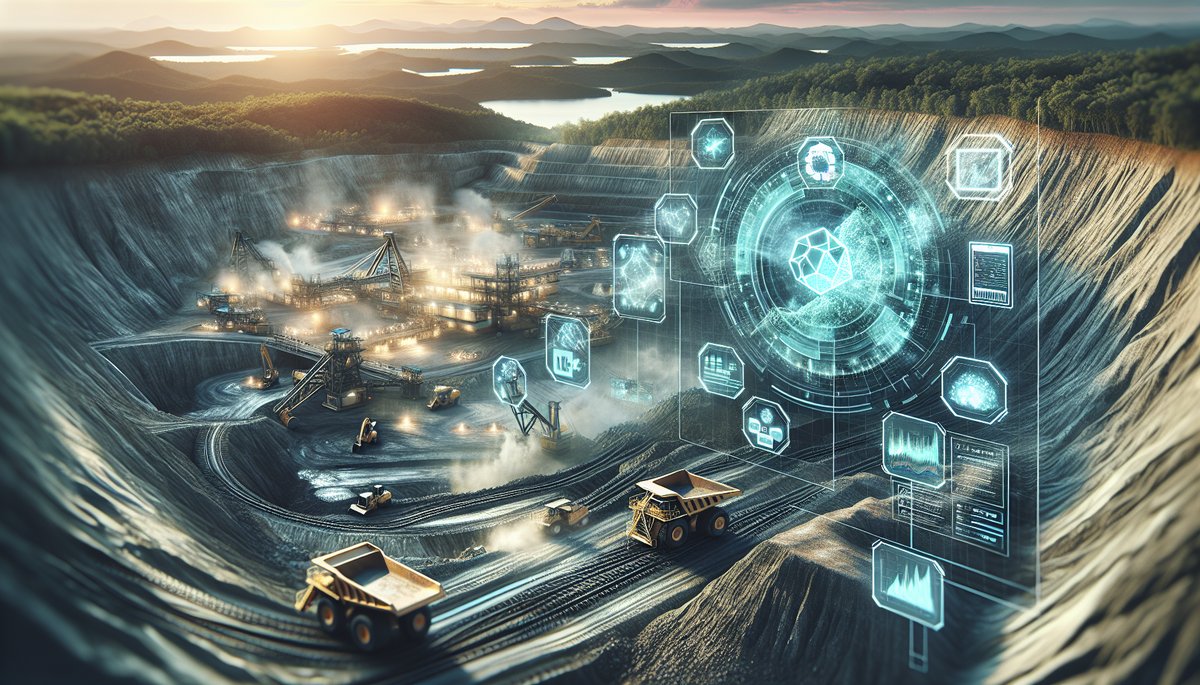
Digital Twins in Mining: Simulating Operations for Maximum Efficiency
Introduction to Digital Twins in Mining
Digital twins are rapidly transforming the mining industry by simulating operations to enhance efficiency, reduce waste, and improve safety. This innovative technology creates a virtual replica of real-world systems and processes, using real-time data from sensors and IoT devices, to provide a comprehensive view of mining operations. From initial ore extraction to metal refinement, digital twins offer a holistic approach to optimizing these complex processes.
The integration of digital twins allows mining companies to simulate different operational scenarios, helping in the development of strategies for better resource allocation and significant waste reduction. By testing various parameters virtually, companies can optimize processes like drilling, blasting, and ore extraction, ultimately improving productivity and minimizing environmental impact. This capability is crucial for companies aiming to enhance their sustainable practices by efficiently managing resources and reducing emissions.
Moreover, digital twins facilitate real-time monitoring and predictive maintenance of mining equipment. This enables operators to assess performance, detect anomalies, and prevent equipment breakdowns before they occur. The ability to visualize complex processes allows for rapid adjustments, ensuring operational precision and efficiency while minimizing energy consumption and waste.
Safety is another significant area where digital twins make a substantial impact. They create virtual environments for training, simulate mining scenarios, and enable remote operation of equipment, thereby enhancing safety and risk mitigation efforts. As the mining industry increasingly adopts these digital tools, the potential for transformative changes becomes more apparent, driving continuous improvement and innovation.
For those interested in the broader impacts of digital transformation across various sectors, exploring other industries can provide valuable insights into how technology is reshaping traditional practices.
How Digital Twins Enhance Blast Optimization
Digital twins are transforming the mining industry by enhancing blast optimization through the use of AI and real-time data. These sophisticated simulations provide virtual models of mining sites that mirror actual conditions, allowing teams to meticulously plan and test blast designs before implementation. By doing so, digital twins significantly improve the accuracy of predicted outcomes, thereby reducing risks and boosting safety across operations.
The power of digital twins lies in their ability to leverage real-time data to optimize blasting and extraction processes, leading to substantial productivity gains. For instance, they can reduce vibrations and improve fragmentation efficiency, contributing to better overall performance in drilling, blasting, and ore extraction. This virtual testing capability not only enhances productivity but also minimizes waste, laying the groundwork for streamlined operations.
Moreover, AI-powered digital twins are proving to be revolutionary by fine-tuning extraction processes in real-time. This adaptability can lead to efficiency improvements of up to 25%, a remarkable feat in an industry where marginal gains are highly valued. By adjusting strategies on the fly, digital twins ensure that resources are utilized as effectively as possible, maximizing output while minimizing environmental impact.
The implementation of digital twins in mining operations also supports sustainability efforts by integrating real-time environmental data. This integration allows for the optimization of resource utilization, reduction of emissions, and mitigation of the environmental footprint, addressing critical concerns such as air quality, water consumption, and energy usage. Consequently, digital twins are not only enhancing operational efficiency but also promoting more sustainable mining practices.
As the mining industry continues to evolve, digital twin technology stands out as a pivotal catalyst for innovation, opening new horizons for operational efficiency and sustainability. By enabling a holistic view of mining operations, from ore extraction to metal refinement, digital twins allow for the optimization of these complex processes, ultimately reshaping the industry's approach to productivity and safety.
Real-Time Data Integration for Operational Efficiency
In the realm of mining, the integration of real-time data into digital twins is revolutionizing operational efficiency. Digital twins act as digital replicas of physical assets, systems, or processes, enabling mining companies to monitor and analyze operations in real-time. This innovative approach allows for the identification of inefficiencies, streamlining of procedures, and ultimately, a significant reduction in operational costs and downtime.
By leveraging Internet of Things (IoT) devices, mining companies can enhance their digital twin systems, driving further innovation and operational improvements across the mining value chain. IoT devices collect critical data inputs necessary for developing digital twin models that possess learning, simulation, prediction, and optimization capabilities. This continuous data stream helps keep the digital twin in sync with the current state of mining operations, unlocking major operational advantages, including enhanced efficiency and safety.
One of the key benefits of integrating real-time data into digital twins is the ability to simulate different operational scenarios. Mining companies can anticipate potential problems, make data-driven decisions, and allocate resources more effectively. This strategic foresight significantly reduces waste and energy consumption while maximizing output and quality. Furthermore, real-time data integration allows for the rapid adjustment of operations to maintain precision and efficiency, ensuring a competitive edge in operational resilience and business agility.
The digital transformation in mining facilitated by digital twins is reshaping the industry's approach to productivity and safety. By providing a holistic view of operations from ore extraction to metal refinement, digital twins enable a more comprehensive understanding of complex processes. This capability allows mining companies to visualize potential bottlenecks and deploy solutions proactively, enhancing overall operational resilience.
As the mining industry continues to embrace digitalization, the role of digital twins becomes increasingly vital. Companies that successfully integrate real-time IoT data into their digital twins will be better positioned to lead in operational efficiency and sustainability. For more insights on the impact of digital twins in mining, explore our mining blog and learn how technology is transforming various industries.
Case Studies: Successful Implementations in Mining
In the mining industry, digital twins are revolutionizing operations by simulating every aspect of the mining process, leading to enhanced efficiency and safety. A standout example is the Barrick Gold Corporation in Nevada, USA, which has fully embraced digital twin technology. This integration allows them to simulate the entire gold extraction and processing operations, optimizing their workflows for maximum efficiency.
Digital twins at Barrick Gold serve as virtual replicas of their physical mines, integrating real-time data analytics to monitor and improve operations. The technology encompasses various components, from ore drilling to emissions management, utilizing connected sensors to capture critical data on equipment performance, water and energy use, and environmental metrics. This allows for predictive maintenance and better production planning, ultimately reducing waste and improving recovery rates.
The implementation of digital twins has facilitated scenario planning and predictive analytics, enabling Barrick Gold to make informed decisions that enhance productivity and safety. By testing scenarios virtually, the company can explore different strategies for efficiency improvements without disrupting actual operations. This approach not only bolsters resource management but also leads to significant cost savings, making digital twins a key driver of success and sustainability in the mining sector.
Moreover, the integration of drones and remote sensing technologies complements digital twins by providing fast and cost-effective environmental monitoring and inspection of hazardous zones. This holistic approach ensures that mining companies like Barrick Gold can maintain high standards of environmental compliance while optimizing operational efficiency.
As the mining industry continues to evolve, digital twins are proving to be invaluable tools for companies aiming to improve decision-making processes and foster sustainable practices. The success of Barrick Gold's implementation highlights the transformative potential of this technology, paving the way for other mining corporations to explore and adopt similar innovations.
Future Prospects and Challenges for Digital Twins in Mining
The future of digital twins in the mining sector looks promising yet challenging. As the technology continues to evolve, the mining industry stands at the brink of a digital transformation that can optimize operations, enhance safety, and promote sustainability. The potential growth in this field is staggering, with the market for digital twins in mining projected to expand from USD 3.1 billion in 2020 to USD 48.2 billion by 2026. This remarkable growth highlights the increasing adoption of digital twins as a core component of mining operations.
Digital twins can fundamentally change how mining operations are conducted. By simulating real-world conditions, they provide a comprehensive view of processes from ore extraction to metal refinement. This allows companies to optimize resource allocation, reduce waste, and improve safety by testing different operational scenarios virtually. However, the path to this transformation is not without its challenges.
One of the significant hurdles is the high initial investment required for digital twin technology. The integration of sophisticated digital infrastructures, capable of supporting real-time data collection and analysis, demands substantial financial resources. Moreover, there is a need for a cultural shift within organizations to embrace these advanced technologies fully. Successful implementation requires a clear vision, strong commitment, and collaboration among various stakeholders, including miners, engineers, and regulators.
Another challenge is the integration of digital twins with existing systems. Many mining operations rely on legacy systems, and the transition to a digital twin model necessitates seamless integration, which can be technically complex. Despite these challenges, advancements in technology, such as 5G and blockchain, are paving the way for more sophisticated and high-fidelity digital twins. These technologies will enhance real-time data integration and enable more advanced simulations, ultimately driving innovation in the mining sector.
The mining industry must strategically prioritize the adoption of digital twins to remain competitive and address the rising demands for minerals, declining ore grades, and environmental pressures. As mining companies continue to leverage these digital tools, the potential for transformative changes in mining practices becomes increasingly evident. Embracing digital transformation is not merely a trend; it's essential for achieving long-term success and sustainability in the industry.
For more insights into how technology is reshaping various industries, visit our industry insights section.