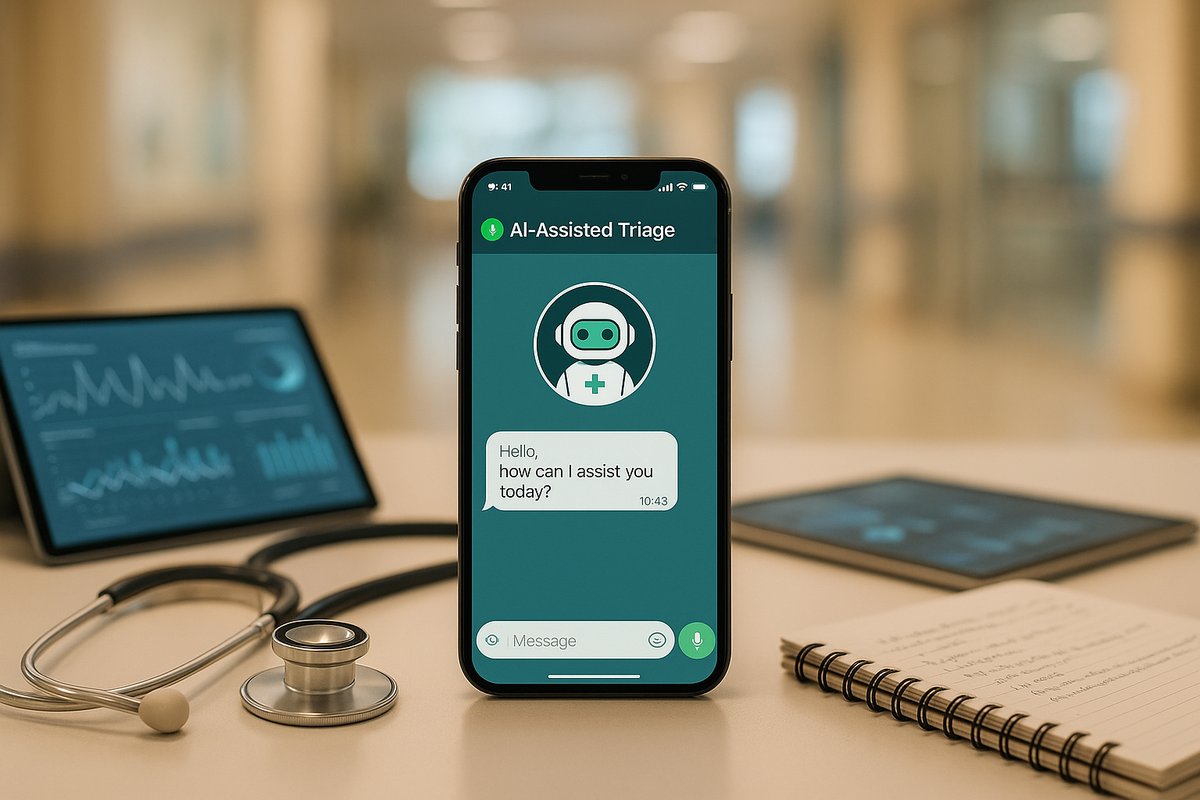
Introduction to AI-Driven Healthcare Triage in Tier-2 Cities
As hospital chains venture into Tier-2 cities, the integration of AI-driven healthcare triage systems becomes a pivotal strategy to enhance patient care. Leveraging the ubiquitous reach of WhatsApp, these systems offer a seamless entry point for patients seeking medical attention. Designed to communicate in regional languages, they ensure accessibility and inclusivity, vital for regions like North Karnataka where linguistic diversity is prominent.
Imagine a patient in Hubli, North Karnataka, experiencing discomfort and unsure of the next steps. Through an AI-powered triage system on WhatsApp, they can describe their symptoms in their native language. The system, using advanced natural language processing, assesses the urgency of the situation and provides preliminary advice. If necessary, the patient is escalated to a teleconsultation with a healthcare professional, ensuring timely intervention.
Beyond immediate triage, these systems are integrated with Electronic Medical Records (EMR), facilitating seamless booking and management of appointments. This integration not only streamlines administrative processes but also enhances the continuity of care, as patient information is readily available for healthcare providers.
VALI, as a core component of AI-driven systems, significantly contributes to reducing the burden on healthcare facilities by efficiently managing patient flow and ensuring that critical cases receive prompt attention. This approach not only optimizes resource allocation but also elevates the standard of care delivered in Tier-2 cities, aligning with the broader goals of healthcare accessibility and quality.
For hospital chains, adopting such AI solutions can revolutionize patient interaction and care delivery, making healthcare more responsive and patient-centric. As AI continues to evolve, its role in transforming healthcare in these emerging markets is poised to expand, offering a glimpse into a future where technology bridges the gap between patient needs and healthcare solutions.
The Role of WhatsApp in Regional Language Healthcare Triage
In the rapidly evolving landscape of healthcare, hospital chains expanding into Tier-2 cities are discovering the transformative potential of WhatsApp-first patient triage systems. By leveraging regional languages, these systems are bridging the gap between healthcare providers and diverse communities, enhancing accessibility and efficiency. This approach is not only revolutionizing patient engagement but is also supporting the seamless transition from initial triage to teleconsultations and EMR bookings.
Consider a scenario in North-Karnataka, where language diversity poses a significant barrier to healthcare access. Utilizing WhatsApp for patient triage in languages such as Kannada or Marathi empowers patients to communicate their symptoms and concerns comfortably. This accessibility ensures that even those who are less fluent in English can receive timely medical attention. Moreover, it facilitates the use of AI-driven tools like VALI (Virtual AI Language Interface) to manage and prioritize patient inquiries effectively, ensuring that critical cases receive immediate attention.
Once a patient's initial concerns are assessed via WhatsApp, the system can escalate the case to a teleconsultation with a healthcare professional. This integration not only streamlines the process but also helps in reducing unnecessary hospital visits, thereby optimizing resource utilization. Furthermore, direct integration with EMR systems allows for efficient booking and management of patient records, ensuring continuity of care.
As healthcare providers explore the potential of AI in patient care, the use of WhatsApp in regional languages stands out as a key strategy in enhancing patient engagement and reducing no-show rates, as discussed in our blog on reducing no-shows in healthcare. By adopting these innovative solutions, hospital chains can not only improve patient satisfaction but also drive operational efficiency, ultimately leading to better health outcomes in Tier-2 cities.
From Triage to Teleconsult: A Seamless Healthcare Journey
In the evolving landscape of healthcare, hospital chains venturing into Tier-2 cities face unique challenges and opportunities. A WhatsApp-first approach to patient triage, especially in regional languages, is transforming patient care by ensuring accessibility and efficiency. This method is particularly impactful in areas like North Karnataka, where linguistic diversity can otherwise pose a barrier to effective healthcare delivery.
Imagine a patient in Hubli, North Karnataka, initiating a conversation with a healthcare provider via WhatsApp in Kannada. The conversation begins with an AI-driven triage system, VALI, which assesses symptoms and provides initial guidance. This system not only understands regional dialects but also respects cultural nuances, ensuring patients feel understood and cared for from the very first interaction.
Once the initial triage is complete, VALI seamlessly escalates the case to a teleconsultation with a healthcare professional, if necessary. This smooth transition is facilitated by the integration of Electronic Medical Records (EMR), which store and update patient information in real time. With EMR, healthcare providers have immediate access to a patient’s medical history, enabling them to make informed decisions quickly.
Such advancements in healthcare technology are crucial for reducing no-shows and improving patient outcomes in Tier-2 cities. By leveraging AI and digital communication platforms, hospital chains can not only enhance patient engagement but also streamline operations, as explored in our article on reducing no-shows in healthcare. As these systems evolve, they promise to revolutionize how care is delivered in regional settings, paving the way for a more inclusive and efficient healthcare ecosystem.
VALI: Virtual Assistant Language Interface for Patient Engagement
In the rapidly evolving landscape of healthcare, hospital chains expanding into Tier-2 cities face unique challenges and opportunities. Among the innovative solutions is VALI, the Virtual Assistant Language Interface, designed to enhance patient engagement and streamline communication. VALI serves as a cornerstone in the WhatsApp-first patient triage approach, particularly effective in regional languages.
Imagine a patient in North-Karnataka reaching out for medical assistance. With VALI, they can initiate contact via WhatsApp in Kannada, their native language, making healthcare access more inclusive and comfortable. This interface not only facilitates initial patient triage but also seamlessly escalates cases to teleconsultations when necessary, ensuring that patients receive timely and appropriate care.
Furthermore, VALI integrates with Electronic Medical Records (EMR) systems for efficient booking and management of patient appointments. This integration reduces administrative burdens and enhances the patient experience by minimizing wait times and streamlining the entire process. Hospital chains can thus focus more on patient care while VALI handles the logistics of communication and scheduling.
The benefits of implementing VALI in Tier-2 cities extend beyond logistical improvements. By leveraging AI to communicate in regional languages, hospitals can increase engagement and trust within communities, ultimately improving healthcare outcomes. This aligns with broader trends in AI-driven healthcare solutions, such as those discussed in our exploration of AI in patient care, showcasing how technology can bridge gaps in healthcare accessibility.
Case Study: Implementing AI Healthcare Solutions in North Karnataka
In the burgeoning Tier-2 city of Hubli in North Karnataka, a remarkable initiative has shown how AI-driven healthcare solutions can transform patient care. The introduction of a WhatsApp-first patient triage system, tailored to communicate in regional languages such as Kannada, has been pivotal in making healthcare more accessible and efficient. This system allows patients to describe their symptoms via WhatsApp, which an AI tool then assesses to prioritize cases. This innovative approach ensures that critical cases are promptly escalated to teleconsultations, providing timely medical advice without the need for an initial physical visit.
One of the key components of this solution is the integration of VALI technology, which enhances the AI's ability to understand and process patient inputs accurately. VALI, a sophisticated AI framework, helps in personalizing the patient journey by analyzing historical data and predicting health outcomes, thus enabling more informed decision-making. Furthermore, this seamless process is augmented by an EMR booking system that automatically schedules appointments based on the AI's assessment and the patient's availability, significantly reducing the administrative burden on hospital staff.
The impact in Hubli has been profound. Patients who previously had limited access to healthcare services can now connect with medical professionals swiftly and in their native language. This not only improves patient satisfaction but also optimizes the workflow for healthcare providers, allowing them to focus on delivering high-quality care. The lessons learned from this implementation emphasize the importance of local language support and the need for robust AI systems like VALI in enhancing the efficiency and reach of healthcare services in Tier-2 cities.
For more insights into how AI is revolutionizing healthcare processes, explore our detailed analysis on reducing no-shows with AI appointment scheduling.