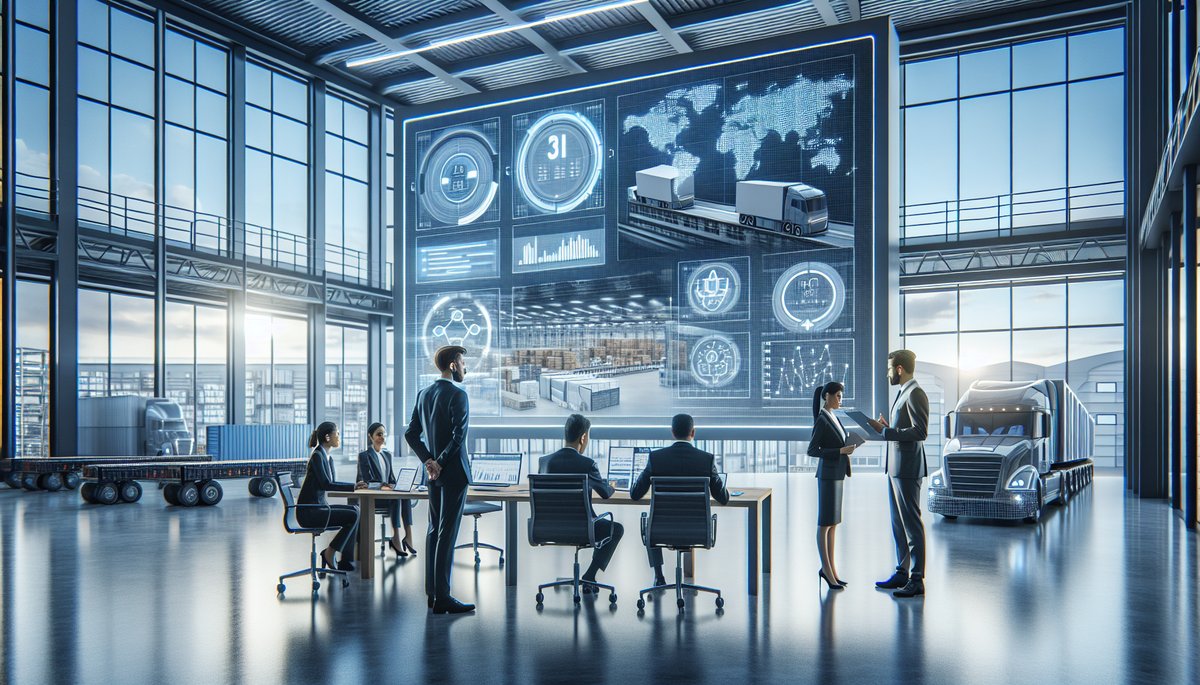
Introduction to AI Agents in Supply Chain Management
AI agents are transforming traditional supply chain management by streamlining operations from end to end. These intelligent digital assistants leverage advanced technologies to automate tasks, enhance efficiency, and improve decision-making across various supply chain functions. The integration of AI agents like MARK, VALI, SU, and REKON into supply chain processes offers organizations the ability to move from assisted operations to fully autonomous systems, significantly reducing the need for manual intervention and enhancing operational resilience.
AI agents in supply chains function by continuously monitoring real-time data, learning from historical patterns, and executing autonomous actions. They serve as co-pilots, augmenting human capabilities by predicting disruptions, optimizing logistics, and ensuring rapid response to changes. By doing so, they provide end-to-end visibility and empower supply chain leaders to make informed strategic decisions swiftly. For instance, AI agents can automate routine processes such as setting reorder points, predicting delivery times, and selecting optimal carriers, thus enhancing overall operational efficiency.
Through the orchestration of multi-agent systems, AI agents can tackle complex, multistep problems by integrating data from diverse sources, such as weather reports and news feeds, to optimize delivery routes and mitigate potential disruptions. This capability helps in maintaining agility and responsiveness, which is crucial in today's unpredictable global environment. As AI agents take on more decision-making roles, human experts are transitioning to roles that focus on oversight and strategy, ensuring that AI systems align with business goals and deliver desired outcomes.
Incorporating AI agents into supply chain management not only streamlines logistics but also reduces costs and improves delivery times. With these advanced technologies, supply chains are evolving into more agile systems capable of adapting to rapid changes, ultimately transforming the landscape of supply chain management. For more insights into how AI is reshaping industries, explore AI in the mining industry and AI agents capabilities.
Key Functions of AI Agents in Logistics
In the rapidly evolving landscape of logistics, AI agents like MARK, VALI, SU, and REKON have become pivotal in automating end-to-end supply chain management processes. These agents are not just passive tools but active participants that perceive, decide, and act within logistics ecosystems. By seamlessly integrating across platforms, they ensure that every aspect of the supply chain—from procurement to delivery—is optimized for efficiency and responsiveness.
MARK, for example, excels in procurement by using predictive analytics to anticipate demand and negotiate with suppliers. This proactive approach ensures that inventory levels are adjusted in real time, reducing waste and maintaining balance between supply and demand. Meanwhile, VALI focuses on warehousing, using real-time data to manage stock levels and streamline the organization of goods, ensuring quick retrieval and dispatch.
Delivery processes are revolutionized by SU, which manages fleet logistics, optimizing routes and schedules to minimize delivery times and enhance customer satisfaction. This is crucial in a world where customers demand flexibility, such as spontaneous changes in delivery addresses or time slots. REKON complements these efforts by handling returns and processing damage reports, ensuring customer grievances are managed efficiently and effectively, thereby enhancing customer experience.
AI agents function as intelligent, goal-oriented systems capable of interpreting data from multiple sources and executing decisions autonomously. Their ability to adapt to changing conditions and communicate with other agents ensures a cohesive and responsive logistics network. This integration fosters a collaborative environment where AI agents continuously improve supply chain operations, making them faster and more accurate.
As supply chains continue to grow in complexity and scale, the role of AI agents will only become more integral. By automating decision-making and responding in real time, these agents transform traditional supply chains into agile, proactive networks ready to meet the demands of a dynamic marketplace. For more insights on how AI agents are reshaping logistics, explore how AI autonomous agents are transforming enterprises.
Real-Time Coordination and Decision Making
In the rapidly evolving landscape of supply chain management, AI agents like Agents MARK, VALI, SU, and REKON are revolutionizing real-time coordination and decision-making. These intelligent systems operate autonomously, continuously perceiving changes in the logistics environment and executing decisions that optimize end-to-end supply chain operations. By integrating seamlessly into existing logistics frameworks, they ensure that inventory management, production, and replenishment processes adapt dynamically to current demands and disruptions.
AI agents act as the nerve center of logistics operations, coordinating every aspect from procurement to delivery. They interpret data from various sources, predict potential disruptions, and take proactive measures to mitigate risks. This capability transforms traditional supply chains into agile networks that can respond instantly to changes, thereby enhancing resilience and reducing waste.
The introduction of agentic process automation has been particularly transformative. This approach enables AI agents to function autonomously across diverse systems, breaking down operational silos and allowing for greater efficiency. Over 50% of processes in a fully autonomous system can be automated, fostering a more adaptable and robust supply chain. These advancements not only streamline operations but also significantly reduce costs by optimizing routing, inventory, and procurement strategies.
As AI agents continue to evolve, they are expected to play an even more strategic role in supply chain management. Future developments will see these systems collaborating across enterprises, integrating IoT data, and leveraging predictive analytics to enhance sustainability. Such innovations will empower logistics teams to become orchestrators of intelligent networks, amplifying human decision-making with machine precision and speed. This evolution is crucial for organizations aiming to maintain a competitive edge in a digitized marketplace.
For more insights on how AI agents are reshaping industries, you can read about their impact on mining, enterprises, and more.
Enhancing Supply Chain Visibility and Efficiency
In the ever-evolving world of supply chain management, AI agents like MARK, VALI, SU, and REKON are playing a pivotal role by enhancing visibility and efficiency. These agents automate logistics processes by monitoring real-time data, optimizing routes, and predicting demand, thus offering a comprehensive view of the supply chain. This end-to-end visibility is crucial for making proactive adjustments to disruptions and automating routine tasks, ultimately improving overall resilience.
AI agents streamline operations by orchestrating workflows across the supply chain, transitioning from assisted to autonomous processes. This shift reduces the reliance on manual interventions, allowing for greater efficiency. By utilizing machine learning models, AI agents can perform demand forecasting and risk assessments, making informed decisions that drive efficiency. Additionally, natural language processing (NLP) enhances communication with suppliers, facilitating better negotiation and relationship management.
These agents also play a critical role in integrating data from multiple sources, providing a holistic view that is essential for effective supply chain management. For instance, by analyzing structured and unstructured data such as weather reports and traffic alerts, AI agents dynamically optimize routes, delivery schedules, and fuel usage in real time. This capability allows businesses to respond instantly to changes, optimize resources globally, and align operations with strategic goals.
Integrating AI agents into supply chain processes not only improves efficiency but also enhances collaboration across various functions such as planning, procurement, manufacturing, and logistics. This integration leads to more coordinated decisions and clearer trade-offs, ultimately transforming supply chain management into a more agile and responsive system. For more insights on how AI agents are revolutionizing different sectors, explore aimatric agents and their transformative impact.
Adaptive Intelligence and Autonomous Planning
In the dynamic world of supply chain management, adaptive intelligence and autonomous planning have become pivotal in enhancing logistics efficiency. AI agents, such as those developed by aimatric, utilize real-time data and advanced algorithms to adapt and optimize logistics planning autonomously. This capability allows for a significant transition from traditional assisted operations to fully autonomous supply chain management, reducing the need for manual intervention and enhancing overall system resilience.
Agents like MARK, VALI, SU, and REKON are redefining logistics by continuously monitoring, evaluating, and responding to the ever-changing demands of supply chain systems. They manage processes from warehouse operations to delivery route optimization, ensuring that disruptions are minimized and operations remain seamless. By leveraging agentic process automation, these AI solutions break down traditional silos, providing end-to-end visibility and decision-making capabilities that were previously unattainable.
A key advantage of these autonomous agents is their ability to learn from each interaction, thereby improving future logistics planning and risk management. This adaptive intelligence not only enhances efficiency but also prepares supply chains to quickly respond to unexpected events, such as sudden changes in weather or global disruptions. With the ability to reroute shipments and manage inventory in real-time, AI agents ensure that supply chains remain agile and responsive.
The integration of AI agents in supply chain management stands as a testament to the power of technology in transforming traditional logistics operations. By embracing these innovative solutions, businesses can achieve greater speed, cost-efficiency, and strategic decision-making capabilities. For more insights into how AI is reshaping various industries, check out our detailed blog on AI in the mining industry and explore the transformative impact of AI on inventory dispatch in manufacturing.
Benefits of Implementing AIMatric’s AI Agents
Implementing AIMatric’s AI agents in supply chain management offers organizations unparalleled flexibility and integration capabilities, transforming logistics from end to end. These custom-built AI agents, including Agents MARK, VALI, SU, and REKON, are designed to automate and optimize complex logistics operations, leading to significant improvements in efficiency, cost reduction, and service levels. By orchestrating workflows, AIMatric’s AI agents enable companies to transition from assisted to autonomous supply chains, automating over 50% of processes. This transition not only reduces manual intervention but also enhances the overall resilience and adaptability of the supply chain.
One of the standout benefits of AIMatric’s AI agents is their ability to improve demand forecasting and planning. By integrating diverse data sources such as social media sentiment, weather patterns, and local events, these agents offer unprecedented accuracy in predicting demand. This capability helps in maintaining optimal stock levels, reducing waste, and minimizing out-of-stock situations. Furthermore, AIMatric’s agents facilitate better coordination across different supply chain functions by sharing data and insights in real-time, thereby breaking down traditional operational silos.
As businesses scale, AIMatric’s AI agents offer the scalability needed to manage increased data volumes and complex decision-making processes without additional strain. This scalability ensures that companies can grow without compromising on efficiency or incurring higher costs. Additionally, by automating decision-making and adapting to real-time changes, these AI agents help supply chains remain agile and responsive to disruptions, ultimately supporting long-term sustainability goals. For more insights on how AI agents are revolutionizing logistics, you can explore how AI agents are reshaping industries or learn more about AIMatric’s range of AI agents.
Future Prospects of AI Agents in Supply Chain
As we look towards 2026, AI agents like MARK, VALI, SU, and REKON are set to revolutionize supply chain logistics, transforming them into proactive, data-driven networks. These agents are enhancing efficiency, reducing costs, and improving responsiveness to market changes by optimizing routes, managing inventory, and coordinating across various supply chain functions. This evolution will see AI agents operate as cross-enterprise orchestrators, integrating business functions for seamless operations.
The future of supply chain management envisions these agents working collaboratively across the entire supply chain, from sourcing to demand planning. MARK, for instance, could optimize logistics by continuously monitoring and adjusting shipping routes in real time, while VALI might manage and predict inventory needs using sophisticated machine learning algorithms. SU could enhance production management by dynamically allocating resources based on current demand and market conditions. Meanwhile, REKON would provide real-time analytics and insights, ensuring that supply chain managers have the information they need to make informed decisions swiftly.
This shift towards fully autonomous supply chain operations is facilitated by agentic process automation, which allows AI agents to operate independently across multiple systems and vendors. This not only boosts efficiency but also creates a more resilient and adaptable supply chain. As supply chains become more digitized and data-rich, AI agents will be able to anticipate disruptions, simulate alternate scenarios, and recommend real-time corrective actions. This transformation from reactive to proactive networks will be crucial in maintaining competitiveness in rapidly changing markets.
For businesses looking to stay ahead, the integration of AI agents into supply chain operations is not just beneficial but essential. By bridging the gap between various supply chain components, these agents ensure operational efficiency, flexibility, and strategic agility. Discover more about how AI autonomous agents are reshaping industries here and explore specific applications in logistics here.